For parents and guardians
Violent extremism violates child’s rights in many ways. It undermines child’s fundamental right to live free from all forms of violence and discrimination, and denies them the right to grow and develop in a safe and supportive environment. Exposure to violence and hostile attitudes causes fear, erodes well-being, weakens the sense of safety, and darkens future prospects.
Today, these impacts are often transmitted through the internet. The vast majority of children encounter hate speech and violent material in digital spaces, and the effects of these encounters can extend broadly into a child’s everyday life, relationships, and development. This is not just about brief or isolated experiences, but also about long-term impacts on attitudes and perceptions of the world. Children are still learning how to function in society and forming their own worldview, which makes them particularly susceptible to different influences—also online.
In online environments, children are exposed to hostile and violent content that is often grounded in deliberate mis- and disinformation. Such content is also spread by actors who actively seek to promote negative stereotypes and increase polarization between different groups of people. Extremist movements in particular exploit the internet to disseminate their propaganda, with the aim of influencing attitudes and normalizing violence against certain groups.
Parents and guardians play a crucial role in protecting children from such influence. This requires awareness of the various types of content circulating online, as well as a willingness to discuss them openly with the child. Proactive conversations, interest in the child’s digital life, and strengthening the child’s digital skills help children recognize harmful content and navigate online spaces more safely. When a child knows that an adult listens and provides support, it is easier to ask for help—also when things encountered online feel frightening or confusing.
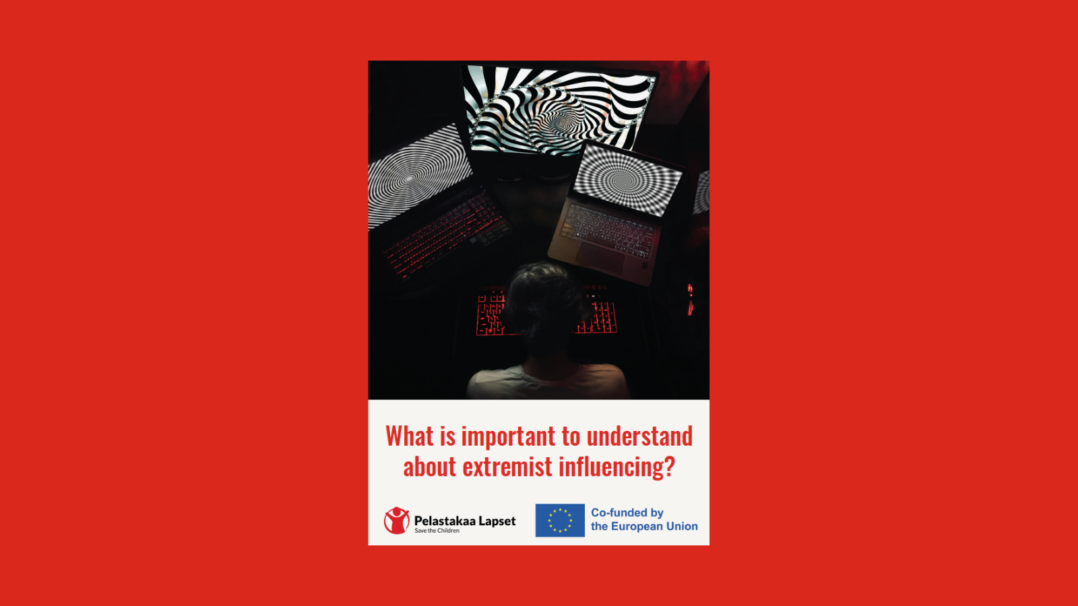
What is important to understand about extremist influencing?
This guide, which is specifically intended for guardians, is available in five languages: English, Finnish, Swedish, Arabic, and Somali.
English: What is important to understand about extremist influencing? (pdf)