
Prevention of Violent Extremism

Violent extremism violates child’s rights in many ways. It undermines child’s fundamental right to live free from all forms of violence and discrimination, and denies them the right to grow and develop in a safe and supportive environment. Exposure to violence and hostile attitudes erodes well-being, weakens the sense of safety, and darkens future prospects.
Recurring global crises, such as wars and armed conflicts, economic uncertainty, and fluctuations in the international security situation, have increased societal tensions and intensified polarization, including in Finland. A societal climate marked by uncertainty creates fertile ground for violent attitudes and hate-fueled speech, both of which have become increasingly visible. These developments are directly reflected in the everyday lives of children and young people, eroding their well-being and weakening the conditions essential for healthy growth and development.
Hostile and hateful attitudes alongside the normalization of violence are particularly evident in digital spaces, where violent content, such as hate speech and videos that depict or glorify violence, spreads rapidly. On many digital platforms, such content has become commonplace and part of the digital reality of many children and young people.
What are extremism and radicalisation?
Violent radicalisation is a process in which values, attitudes and the worldview become more polarised and begin to contain violent traits. It reflects a growing commitment to a violent ideology and/or actions that oppose equality.
Violent extremism refers to the support, encouragement, threat or actual use of violence based on an ideology. Extremist worldviews are typically united by opposition to diversity, equal human rights, democracy and the rule of law.
Extremist online influencing is an activity that uses online platforms to spread and normalise violent ideologies and to attract new people to participate in the activities of the extremist group. Influencing is targeted at both large groups and individually selected individuals.
Violent radicalisation is a complex phenomenon with many potential causes. Factors such as systemic disadvantage, deficiency in future prospects, marginalization, experiences of injustice, social exclusion, lack of social relationships, and inadequate skills to cope with life’s uncertainties and failures can under certain conditions make individuals susceptible to radicalisation.
Anyone can become radicalised, but children and young people who are in the process of forming their identity and worldview are particularly vulnerable to extremist influences. Adolescence, in particular, is a period of life with many developmental factors that can make one suspectible to radicalisation. For instance, the developmental tendency towards black-and-white thinking, a strong need to belong, and identity-related developmental tasks may put young people in a more vulnerable position in relation to violent radicalisation.
Fortunately, radicalisation remains a marginal phenomenon in Finland. However, societal polarization has increased in recent years, creating a fertile ground for hostile attitudes and inter-group relations, and radicalisation of thoughts.
While hate speech cannot automatically be considered a sign of radicalisation, it must always be addressed. Hate speech does not belong in any respectful dialogue or have a place in a democratic society.
Research shows that hate speech increases violence. It negatively affects its targets and the entire society, increasing discord and hostility among people. A society saturated with hate speech provides fertile ground for violent extremism.
The internet alone does not cause radicalisation, but it increases opportunities for it. What matters is how one uses the internet: which platforms one frequents and how one interacts on them. The internet is full of violent content and hate speech; extremist propaganda spreads quickly, and extremist groups actively try to recruit new members, especially on social media platforms. Therefore, it is important to strengthen the resilience of children and young people to violent ideologies and to make the internet as safe a place as possible for everyone.
Extremist content is characterised by the glorification and justification of violence as well as belittling, degradation and deliberate dehumanisation of certain groups of people. Such content also aims to undermine trust in democracy. Young people in particular are exposed to discriminative and racist material as well as speech that incites hatred. It is also common to come across images depicting various acts of violence online.
Extremist content is spread on social media platforms and in games that are popular among children and young people. Tiktok, Instagram, Telegram, Roblox, Minecraft, Discord and Snapchat are familiar to many young people and are used as tools for extremist online influencing. Often, young people do not need to actively seek out violent or hateful content, but they are exposed to such materials on social media and gaming platforms regardless, for instance through recommendation algorithms or content shared by friends.
Extremist content can be difficult to identify because it is often disguised by humour, memes or code language. Often, the aim is to influence on an unconscious level, in which case the extremist message is consciously faded out.
Using code language, double meanings and references
The purpose is to create a “secret inner circle” in order to promote cohesion and to portray other groups of people as enemies.
Using humour and popular culture
Entertaining content appeals to young people, fades out hostile messages and increases identification.
Emotionally appealing communication
The content exploits feelings of injustice and bitterness and aims to channel them into hostile attitudes.
Spreading disinformation and conspiracy theories
Spreading incorrect and false information to justify a violent ideology.
Using game related imagery and gamified elements
Popular digital games are transformed into versions that promote hostile ideologies.
Grooming
The groomer seeks to establish a trusting relationship with the child in order to manipulate them into extremist activity later.
Pay attention to the way one speaks. Speech makes thinking and attitudes visible.
Repeated use of harmful or discriminatory language should be taken seriously and addressed in time. Examples of such signs are:
- Questioning the principles of diversity and equality, for example by belittling girls and women or expressing negative views toward sexual and gender minorities
- Using degrading or discriminatory remarks disguised as humor, such as making demeaning jokes about specific groups of people
- An emphasised us versus them -thinking, where they are wrong, despised or dehumanised (i.e. they are compared to animals or invasive species, for example)
- A sense of victimhood, where one feels targeted, mistreated, or marginalized by other groups of people, or the recognition of human rights for other groups
- Considering one’s own worldview, thoughts and qualities or those shared with a community to be superior to other perspectives and qualities
Exposure to extremist content often increases anxiety and fear. In some cases, young people may also withdraw and isolate themselves. If one is highly reluctant to discuss their online experiences or their social circles and interests become significantly narrow, it is important to make an effort to engage and explore what may be going.
At its core, prevention of violent radicalisation means strengthening resilience, e.g. psychological resistance. Media literacy, critical thinking, emotional skills, and empathy are crucial protective skills against radicalization. In addition, it is essential to invest in general well-being and basic needs: ensuring that every child can feel their life is meaningful and that they belong in this society.
How to protect youth from extremist influence?
- Support young people to form meaningful relationships and ensure they have access to safe and supportive communities, since extremist groups often appeal to the need to belong and feel valued.
- Encourage interaction with people from different backgrounds and promote empathy, as strong empathy skills help build meaningful relationships and enhance the ability to understand other peoples’ experiences and perspectives.
- Support young people in dealing with difficult and unfair experiences, as a sense of injustice can contribute to the development of extremist views.
- If youth experiences social exclusion or feelings of being an outsider, process these experiences together to prevent them from developing into bitterness or hatred toward others.
- Practice emotional skills together with youth, including identifying, expressing, and managing emotions. Feelings of uncertainty or a lack of perspective about the future can cause fear and anxiety, which are also actively exploited in extremist influencing.
- Remember that digital environments play an important role in young people’s lives – they are key tools in communication and formation of meaningful relationships, and also important spaces for building one’s own identity. For young people, the internet is also a place to learn new things, relax, be entertained and maintain relationships with friends.
- Don’t hesitate to ask – you’re not expected to know everything. Invite youth to tell you about topical social media trends, the platforms they use, and what they encounter there.
- Listen genuinely – do not dismiss or ignore online experiences. What happens online affects young people’s well-being just as much as offline experiences. Open interest and discussion create a sense of safety and support youth in processing their online experiences.
- Do not blame or punish young people if they tell about encountering disturbing content online. Remember to also stay calm yourself – this will make youth feel safe when discussing difficult and upsetting topics.
- Engage in discussions with youth about topical online phenomena: For example what kinds of themes disinformation typically focuses on and what are the common mechanisms used to legitimize violence in digital spaces.
- Discuss with young people what to do when encountering extremist content: Ask them to tell a safe adult about the content they encountered, not to share the content or react to it, and to report the content to the service provider. If necessary, inform the authorities together.
- Learn about the security settings and reporting practices of digital platforms together with young people. For example, many platforms allow you to limit the visibility of malicious content.
- Encourage young people to interact with diverse people and to respect differing viewpoints. Rather than reinforcing polarization, highlight shared traits and common human experiences.
- Discuss freedom of speech and remind youth that it also involves responsibility and respect for other people – freedom of speech does not entitle the violation of anyone’s human rights.
- Emphasise the positive impacts of equality, human rights and a democratic society on both individuals and communities.
Do not hesitate to ask for help if you have serious concerns about the well being of youth.
- Contact the parties involved in young people’s daily life, such as schools, educational institutions or youth services, for support.
- Local multidisciplinary Anchor teams provide support in issues related to the radicalisation of young people.
- You can report a concern and get help from the police in the Net tip online service.
Information and materials

For parents and guardians
Protecting children from violent extremism is the responsibility of parents and guardians. We have compiled information and materials to support the protection of children.
For professionals
Here you can find materials for professionals working with children and youth to support the prevention of hostile ideologies and violent extremism.
Read more from our publications
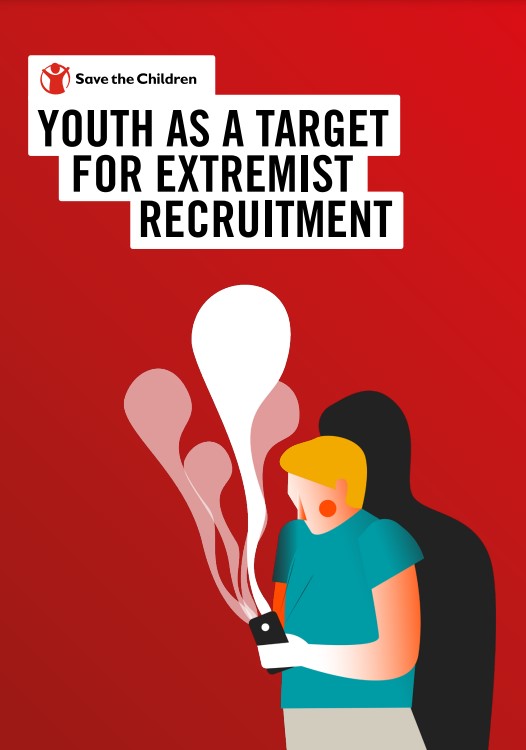
Violent extremist groups seek to ensure the continuity of their activities and are constantly recruiting new members and supporters for their ideologies. Extremist propaganda is spreaded especially online, and nearly all extremist movements use social media, video game platforms, and dark web forums to advance their agenda.
Read more about the recruitment channels and methods used by extremist groups in our publication.
Violent extremist content is especially salient online. It threatens child’s right to safety and wellbeing by undermining social cohesion, increasing polarisation and exposing children to hate speech, violent rhetoric and physical violence.
Read more about how violent extremism manifests online, and how can we safeguard children from it’s effects in our publication.