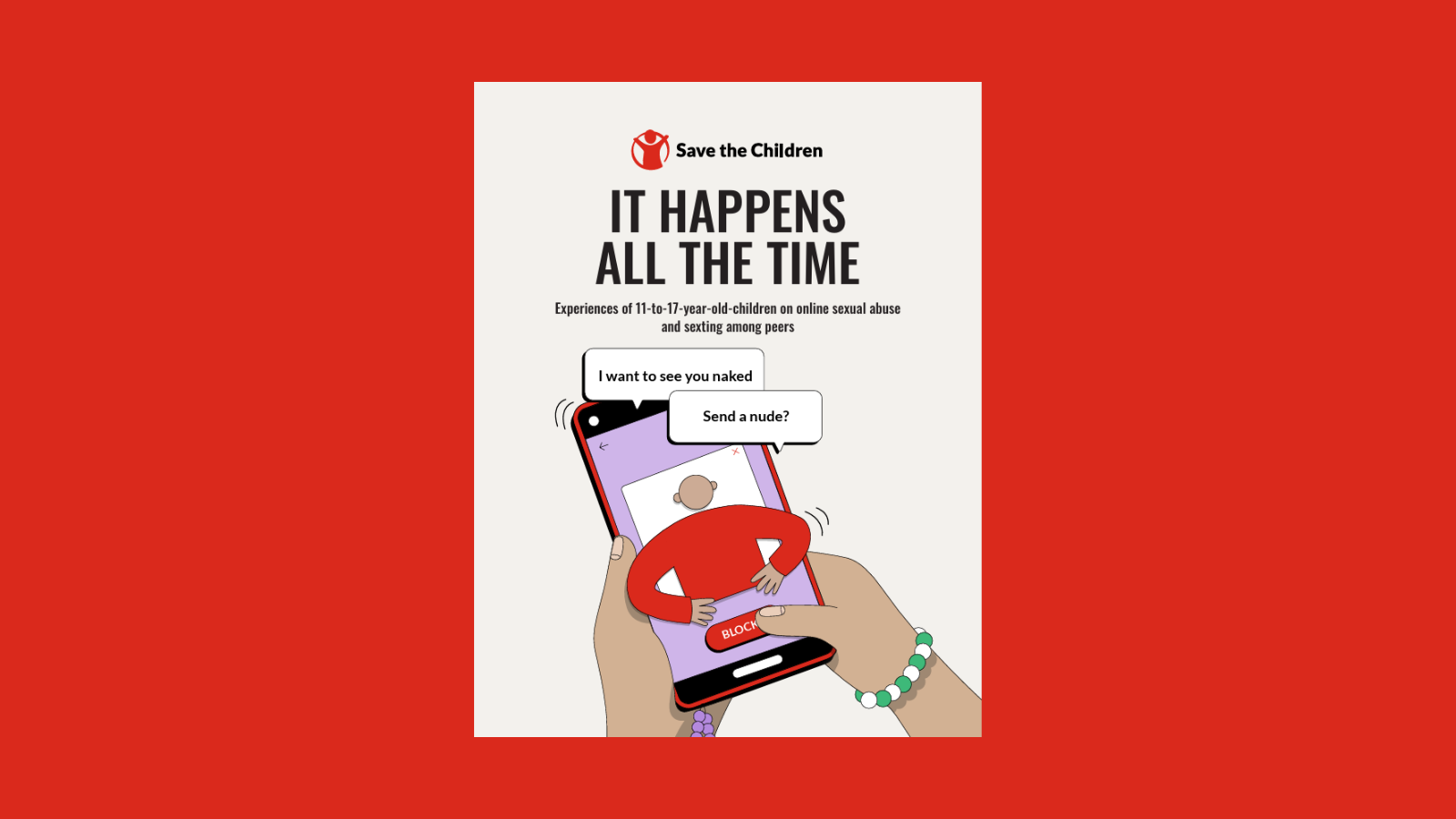
IT HAPPENS ALL THE TIME
Children aged 11–17’s experiences on online sexual violence and sexual messaging between peers.
As the internet and social media have become an established part of children’s everyday lives, sexting between peers and sexual abuse online have also become more common. In Finland, there has been little research on sexting between children. The aim of this report was to survey the prevalence of sexting between peers and children’s views on it. In addition, this report examined both sexual abuse between peers and sexual abuse against children perpetrated by adults online. The respondents to the survey were 4,106 children aged 11–17.
More than a quarter of the children reported that they had received a sexual message, and 15 per cent had sent one themselves during the past year. The sending of sexual images was often related to dating relationships, but children most often received sexual images from unknown people. The majority of children who received sexual images had also received unwanted images. Receiving these images was slightly more common among younger children. The children were predominantly cautious about sexting: some accepted sexting under certain conditions (trust, consent, dating), but many felt negatively about it.
One third (31%) of the children who responded to the survey said they had been contacted online by an adult or a person at least five years older than them, and the majority (67%) of these children had experienced sexual abuse. One fifth (21%) of all children who responded to the survey had experienced sexual abuse by both a peer and an adult. The most common form of sexual abuse among peers was receiving unwanted sexual messages and images. When perpetrated by adults, the most common experience was receiving sexual messages from an adult, but other forms of abuse, such as requests to perform sexual acts on video, were also reported. A quarter of the children had been offered a reward in return for sexual acts. Experiences of sexual abuse perpetrated by adults were highlighted among girls (33%) and children of other gender (20%). The children rarely told anyone about their experiences of sexual abuse. If they did, they usually told a friend. The children told someone about the experience of sexual abuse because the experience felt distressing, but a large proportion of the children’s responses also indicated that the incident did not feel serious to them. This reflects the duality of the phenomenon: online sexual abuse is seen as both distressing and commonplace.
According to the results, sexting between peers is a risk factor for sexual abuse by both peers and adults. The children may not have been able to distinguish between sexting and sexual abuse, which indicates that they need more information on safe internet usage and evidence-based sexual education. On the other hand, some of the children were well aware of the risks related to sexting and sexual abuse. Prevention measures should be targeted at even younger children and their parents. The platforms where sexual abuse takes place also have a responsibility for preventing sexual abuse.