- Why is it not appropriate to use the term “child pornography”?
- How can child rights be taken into account when addressing child sexual abuse in the media?
Child sexual abuse is a global problem that can affect any child, regardless of where they live – having a device with internet access is all it takes. Any child can be subjected to sexual abuse, because in all environments where there are children, there may be adults who want to commit sexual abuse against them.
Journalists have the opportunity to bring broad social issues, such as child sexual abuse, into public debate. This power also comes with responsibility.
When addressing child sexual abuse, the chosen words and the way the phenomenon is described influence public attitudes, knowledge, and sense of responsibility. To ensure that reporting on child sexual abuse is appropriate and respects the rights of the child, it is important not only to use proper terminology but also to carefully weigh, among other things, the public’s right to information against the child’s right to privacy.
The majority of child sexual abuse still goes unreported to authorities, which is another reason why it is important to discuss the issue. This can help lower the threshold for victims of sexual abuse to report the crimes and bring the perpetrators to justice.
Since 2002, the Finnish Hotline Nettivihje has worked to prevent and combat child sexual abuse, particularly in digital environments. This work is based on the child’s right to be protected from all forms of violence.
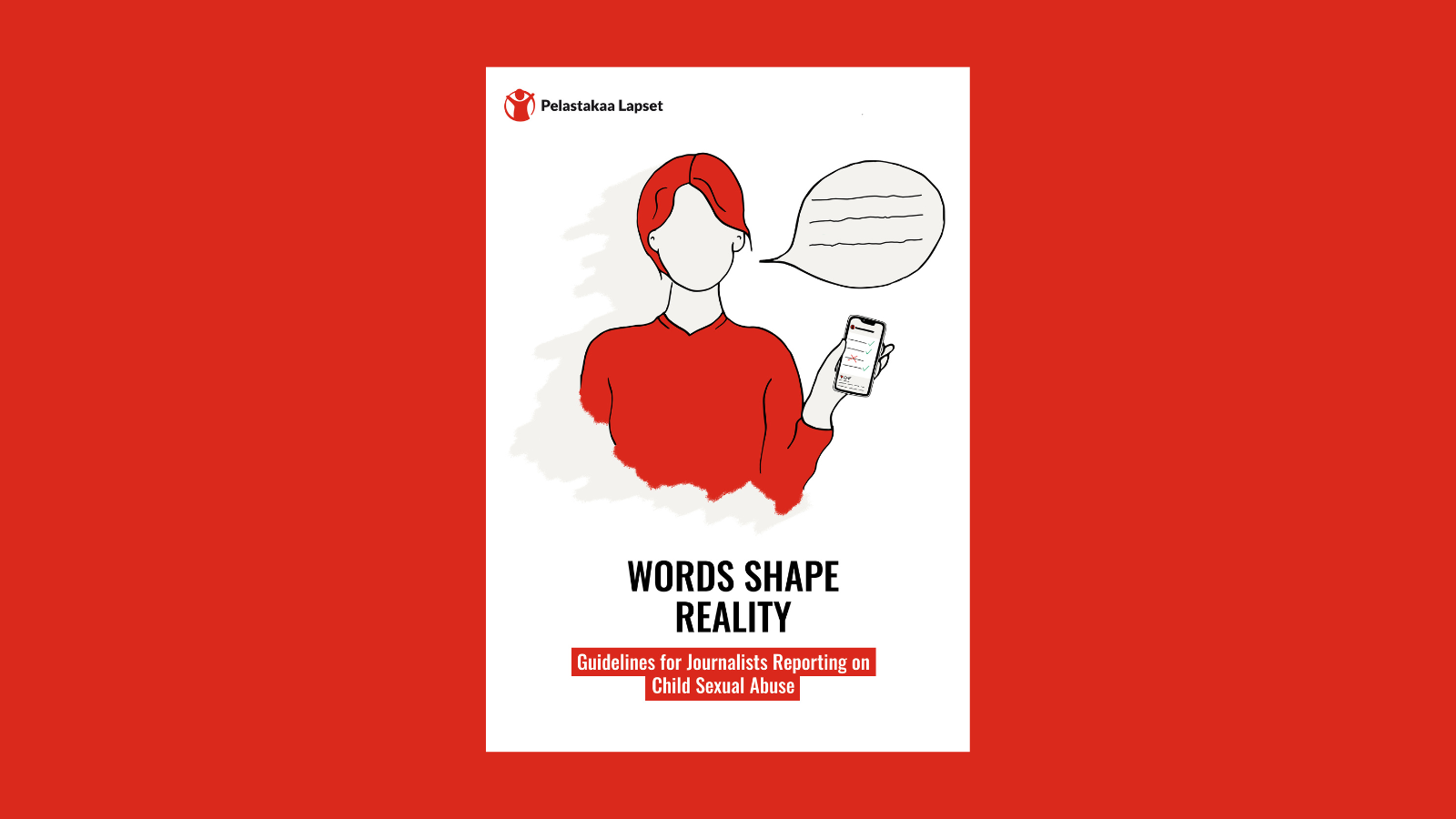
With this guide, we want to help journalists succeed in their work when addressing and reporting on child sexual abuse. This is a sensitive topic that involves challenging terminology, and this guide provides practical advice on how to discuss child sexual abuse in a way that respects the rights of the child.
Checklist for journalist on reporting on child sexual abuse
- Use terms that respect the rights of the child
Confirm the terms. For example, talk about child sexual abuse material, not child pornography. - Remember that the perpetrator is always responsible
The child is never responsible for what has happened. The responsibility always lies with the perpetrator, and this responsibility should not be obscured by, for example, the choice of words or sentence structure. - Link the issue to a broader social context
Raise awareness. This is not about individual cases, but a widespread social problem. - Help people understand the phenomenon
Provide information. This will help the public understand and form opinions about child sexual abuse. - Respect the rights of the child and the perspective of children who have experienced abuse
Consider the child’s perspective. It is important to carefully weigh the child’s right to privacy against the public’s right to information. - Avoid sensationalism
Consider how much detail is necessary to share. Avoid unnecessary visual and sexualized descriptions and language that implies consent. - Offer perspectives on prevention
Help create hope. Child sexual abuse is not something that just happens; society can take action at every level to prevent it. - Provide instructions
Provide guidance. With the right instructions, the public will get the information and help they need.